ISO 26262 and Requirements
Today, it is no longer possible to see a car as being only an assembly of steel and engine, powered by fuel. In just a few decades, electronic components have grown from nearly 0% to more than 40% of the total cost of a vehicle. The increasing number of functions and electronics systems in the car is driven by safety, performance, and ecological requirements. This trend will continue with the introduction of new technologies, such as electrified and autonomous cars.
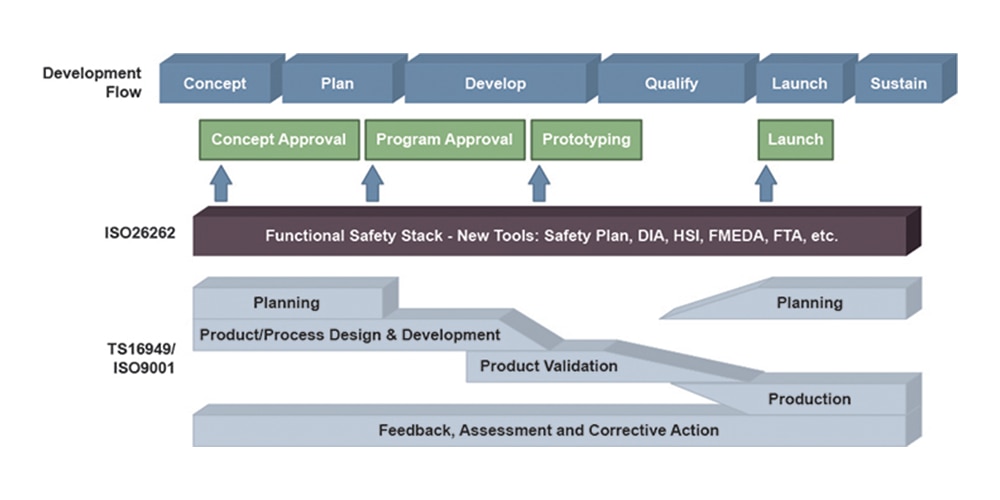
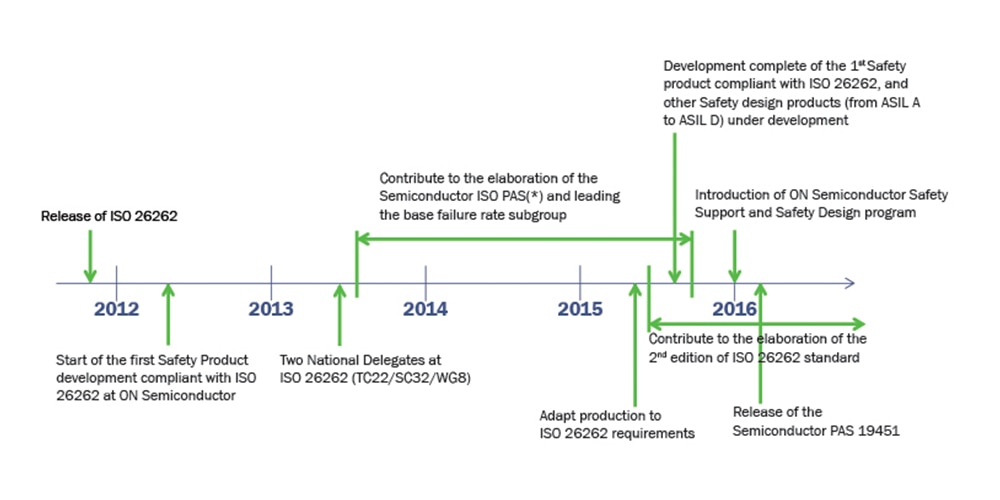
What happens if some of these electronic functions start to fail? How can we guarantee the safety of the passengers? One contribution from the automotive industry was the introduction of a functional safety standard, ISO 26262, dedicated to the development of electrical and electronics systems installed in passenger vehicles. ISO 26262 was released in November, 2011, has become an industry standard, and is widely used in the development of automotive safety related integrated circuits. The ISO 26262 standard highlights the fact that every step in the construction of a vehicle can impact safety. Therefore, to reach functional safety, a tight collaboration between the different stakeholders, from car manufacturers to semiconductor providers, is required.