Robots welding a car

Modern Highly-Efficient Welding Equipment

Industrial welding equipment forms the backbone of modern manufacturing and construction by enabling the permanent joining of metals through controlled heat, pressure, or both. Learn about welding trends, modern inverter topologies and usage of wide band-gap semiconductors for improved system efficiency.

Welding Equipment for Modern Industry

Welding equipment systems combine advanced power electronics, control systems, mechanical subsystems, and process monitoring technologies to deliver precise, repeatable, and high-quality welds. Welding equipment is used in applications ranging from automotive body assembly and shipbuilding to aerospace structures, pipelines, heavy machinery, and renewable energy installations. Modern welding solutions support a wide range of processes including arc welding, resistance welding, laser welding, and more, each optimized for specific materials and production requirements.

Industrial welding is governed by a set of standards that ensure weld quality, safety, reliability, and process consistency. Welding procedure standards, including ISO 15614 and ASME Section IX, define how welding procedures are developed, tested, and qualified before production use. Weld quality is evaluated according to standards such as ISO 5817.  Each industry sector and welding type has their own standards imposing additional requirements, ensuring that welded structures meet stringent performance and safety requirements.

Today's welding equipment is largely based on high-frequency inverter technology, which has transformed traditional transformer-based welders into compact, lightweight, and energy-efficient systems. The inverter stage converts AC input power into regulated low-voltage, high-current output suitable for sustaining a stable welding arc. High-frequency switching allows the use of smaller magnetic components while improving dynamic control of welding current and voltage. Advanced digital controllers continuously monitor welding parameters to optimize arc stability, improve weld quality, and support automation and robotic welding platforms.

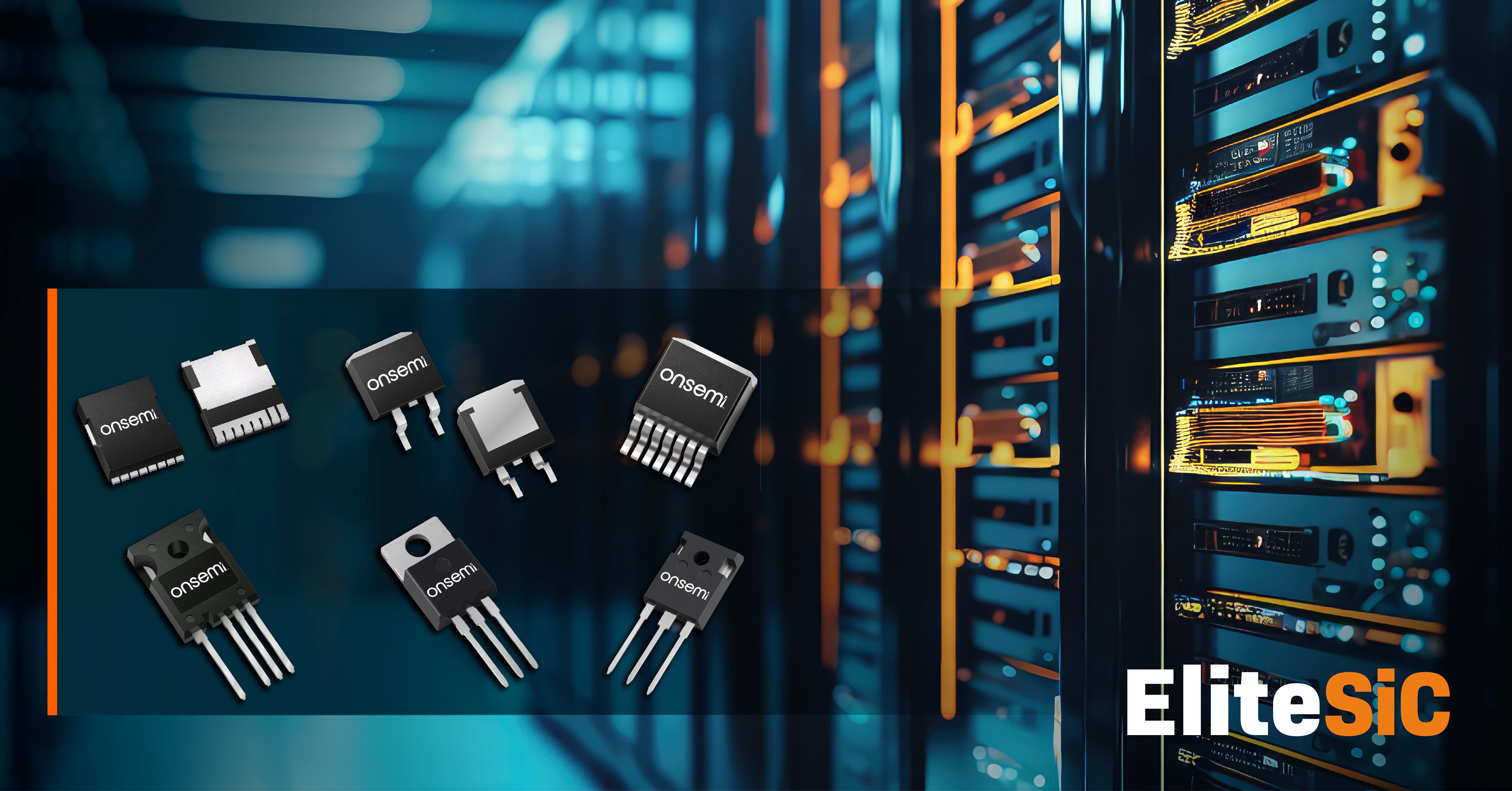
A key trend in industrial welding equipment is the adoption of advanced semiconductor technologies that increase efficiency, power density, and reliability. While IGBTs remain widely used for their robustness and high-current capability, SiC MOSFETs and SiC cascode JFETs are gaining traction. These wide-bandgap devices deliver lower switching losses, higher temperature operation, and faster switching speeds, enabling smaller passive components, reduced cooling requirements, and more compact welding systems. As a result, manufacturers can achieve higher efficiency without compromising arc performance or long-term reliability.

The welding equipment market is evolving toward greater automation, connectivity, and sustainability. Robotic welding cells, real-time process monitoring, predictive maintenance, and digital traceability are becoming standard in high-volume manufacturing. Although arc welding remains dominant due to its versatility and cost-effectiveness, laser, friction stir, hybrid, and battery-welding processes are expanding rapidly, particularly in EV and aerospace applications. To improve productivity, weld quality, and energy efficiency, modern welding systems increasingly integrate advanced power electronics, intelligent controls, and automation technologies to deliver scalable, future-ready solutions.

Block Diagrams

製品

Silicon Carbide (SiC) MOSFETs

Our SiC MOSFETs are designed to be fast and rugged and include system benefits from high efficiency to reduced system size and cost. MOSFETs are metal–oxide–semiconductor field-effect transistors with insulated gates. These silicon carbide MOSFETs have a higher blocking voltage and higher thermal conductivity than silicon MOSFETs, despite having similar design elements. SiC power devices also have a lower state resistance and 10 times the breakdown strength of regular silicon. In general, Systems with SiC MOSFETs have better performance and increased efficiency when compared to MOSFETs made with silicon material.

There are many advantages to choosing SiC MOSFETs over silicon MOSFETs, such as higher switching frequencies. High-temperature development is also not a concern when using SiC MOSFET modules because these devices can operate efficiently even in high heat. Additionally, with SiC MOSFETs, you benefit from a more compact product size because all components (inductors, filters, etc.) are smaller.

IGBTs
Insulated Gate Bipolar Transistors (IGBTs) that offer maximum reliability in high performance power conversion applications.
Silicon Carbide (SiC) Cascode JFETs
Our high-performance SiC Cascode JFETs utilize a unique cascode configuration, integrating a high-performance SiC fast JFET with a cascode-optimized Si-MOSFET.
Silicon Carbide (SiC) Modules

SiC Modules contain SiC MOSFETs and SiC diodes. The boost modules are used in the DC-DC stages of solar inverters. These modules use SiC MOSFETs and SiC diodes with voltage ratings of 1200V.

A Silicon Carbide (SiC) Module is a power module that operates with Silicon Carbide semiconductors for its switch. The purpose of a SiC power module is the transformation of electrical power through switches to improve system efficiency.

The primary function of SiC Modules is to transform electrical power. Silicon Carbide offers an advantage over silicon because, with less resistance to move away from the source (due to increased efficiency), SiC devices can operate at a higher switching frequency. A SiC based system is also more compact and lightweight than a silicon solution, allowing for smaller designs. Therefore, SiC devices are the ideal solution for situations where you want to increase efficiency and improve your thermal management.

Low/Medium Voltage MOSFETs
Portfolio of comprehensive range of Low-medium voltage power Mosfets that delivers superior performance and reliability for switching applications. Our cutting-edge PowerTrench® T10 technology delivers industry leading RDS, higher power density, reduced switching losses and better thermal performance.
Gate Drivers
GaN, IGBT, FET, MOSFET, H-Bridge MOSFET, and SiC MOSFET inverting and non-inverting drivers ideal for switching applications.
Power Factor Controllers
NCP1681
Totem-Pole Continuous Conduction Mode (CCM) / Multi-mode (CrM-CCM) Power Factor Correction Controller
Power Factor Controllers
NCP1680
Totem-Pole Critical Conduction Mode (CrM) Power Factor Correction Controller
Ethernet Controllers
T30HM1TS2500
10BASE-T1S Ethernet Controller, Treo Platform, MAC-PHY with SPI Interface
Ethernet Controllers
NCN26000
10BASE-T1S Ethernet PHY with MII interface
Ethernet Controllers
NCN26010
Ethernet Controller, 10 Mb/s, Single-Pair, MAC + PHY, 802.3cg, 10BASE−T1S Compliant
Digital Isolators
Products that use a high frequency modulated signal to transmit high speed digital data across a capacitive isolation barrier.

Documents

Eval Board: Manual
Discrete Double Pulse Tester Evaluation Board User's Manual
Eval Board: Manual
Discrete Double Pulse Tester - Extension Daughter Cards Set Evaluation Board User's Manual
Eval Board: Manual
Hotplate and Double Pulse Generator Evaluation Board User's Manual
Collateral Brochure
Power Supply Solutions
White Papers
Popular Topologies in Offline Power Supplies
Application Notes
SiC MOSFETを効率的に駆動するための絶縁型ゲートドライバの使用法について
Application Notes
T2PAK: Top‐Side Cooled Package Designed for Automotive and Industrial High Voltage Applications
White Papers
Engineering Essentials: Choosing Between Digital Isolators or Optocouplers
White Papers
高速スイッチングアプリケーション向けオンセミEliteSiC M3S技術
Application Notes
Top Cool Package for Power Discrete MOSFETs
Application Notes
SiC Cascode JFETs: A Comparative Analysis of Inverter Topologies and Modulation Techniques for Enhanced Efficiency
User's Manual
SiC Cascode JFET & Module User Guide

Evaluation Boards/Kits

Evaluation Board
EVBUM2897G-EVB
Evaluation Board for Double Pulse Testing discrete solutions
Evaluation Kit
EVBUM2909G-EVK
Discrete Double Pulse Tester – Extension Daughter Cards Set
Evaluation Board
EVBUM2901G-EVB
Hotplate and Double Pulse Generator Evaluation Board

Design Resources

Tools and resources for your evaluation process.

Find the Right Product

Utilize our PRT+ tool to identify the ideal product for you.

System Solution Guides

Explore tailored components and insights for your application.

Evaluation Boards & Kits

Buy and validate the performance of chosen components.

FAQs

Inverter-based welders operate at high switching frequencies, enabling the use of much smaller transformers and passive components. This results in lower weight, higher efficiency, improved arc stability, faster dynamic response, and better welding performance while reducing overall system size and power consumption.

Designers must balance efficiency, power density, thermal management, electromagnetic interference (EMI), cost, and reliability. Welding systems must deliver high currents under harsh operating conditions while maintaining stable arc performance, minimizing switching losses, and meeting safety and electromagnetic compatibility requirements.

Industrial welders commonly use half-bridge, full-bridge, forward converter, and full-bridge LLC resonant converter topologies. The selection depends on power level, efficiency targets, cost constraints, arc quality requirements, and system complexity. LLC converters offer the highest efficiency and arc stability, while forward converters are valued for robustness and simplicity.

Silicon Carbide (SiC) MOSFETs offer significantly lower switching losses, higher operating temperatures, and faster switching frequencies than silicon devices. These characteristics enable smaller magnetic components, reduced cooling requirements, higher power density, and improved overall system efficiency, making them attractive for next-generation welding equipment.

Related Videos

Let's keep going – watch these videos for deeper dives and fresh perspectives.

Support and Community

If you're interested to learn about any onsemi technology, search for related articles in Help library.

サポート

オンセミは、お客様の利便性を考慮し、さまざまな方法によるお問い合わせに対応しています。

セールス

製品に関するご質問、またはデザインに関するサポートが必要ですか?

更新情報

新製品リリース、イベント、技術的洞察!

industrial welding