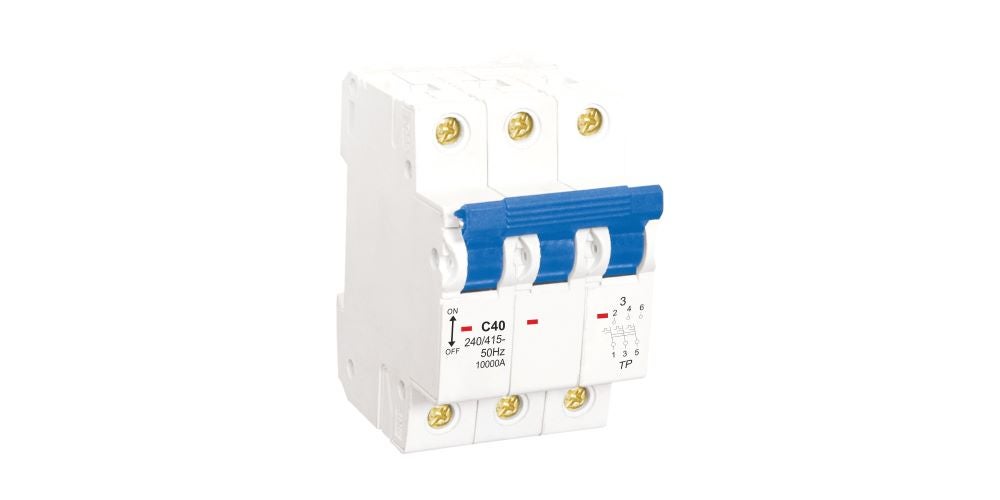
A close-up of a circuit breaker

Semiconductor-Based Protection

Solid-state circuit breakers (SSCBs) are advanced, semiconductor-based protection devices that replace mechanical contacts with electronic switching. They offer ultra-fast response and arc-free operation.

Solid-State Circuit Breakers for Fast, Intelligent Power Protection

Solid-state circuit breakers (SSCBs) are an emerging alternative to conventional electromechanical circuit breakers, using semiconductor switches instead of mechanical contacts to interrupt fault currents. By eliminating moving parts and electrical arcing, SSCBs provide microsecond-level fault interruption, improved reliability, longer operational life and programmable protection settings. These capabilities make them well suited for DC power distribution, battery energy storage systems, EV charging infrastructure, industrial automation and modern smart-grid applications.

Compared with conventional breakers, SSCBs offer several significant advantages. Mechanical breakers typically require milliseconds to interrupt fault currents and suffer from contact wear, arcing and limited switching life. In contrast, SSCBs can clear faults hundreds of times faster, reducing fault energy and improving system protection. Semiconductor switching eliminates contact erosion and arc-suppression requirements, enabling virtually unlimited switching cycles and higher operational reliability. SSCBs also support adaptive protection thresholds, remote monitoring, diagnostics and communication capabilities that allow integration into intelligent energy-management systems and Industry 4.0 infrastructures.

The core of an SSCB is the solid-state switch, typically implemented using silicon carbide (SiC) JFETs, SiC Combo JFETs or SiC MOSFETs. Wide-bandgap SiC devices offer low conduction losses, high voltage capability, excellent thermal performance and fast switching speed, enabling efficient interruption of high fault currents.  Current design trends favor parallelized SiC devices, advanced gate control and optimized dv/dt management to reduce EMI, improve efficiency and support scalable power levels from low-voltage DC systems to medium-voltage applications.

Safety and compliance are vital in SSCB design. Engineers must validate device operation within SOA limits, ensure fail-safe behavior during power loss, and protect against ESD, surges, and EMI.  Key standards include IEC 60947 (low-voltage switchgear), IEC 61000 (EMC compliance), UL 489 (circuit protection), and IEC 61508 (functional safety). Advanced SiC technologies, intelligent sensing, and high-speed protection enable compact, efficient, and connected SSCBs.

製品

Silicon Carbide (SiC) JFETs
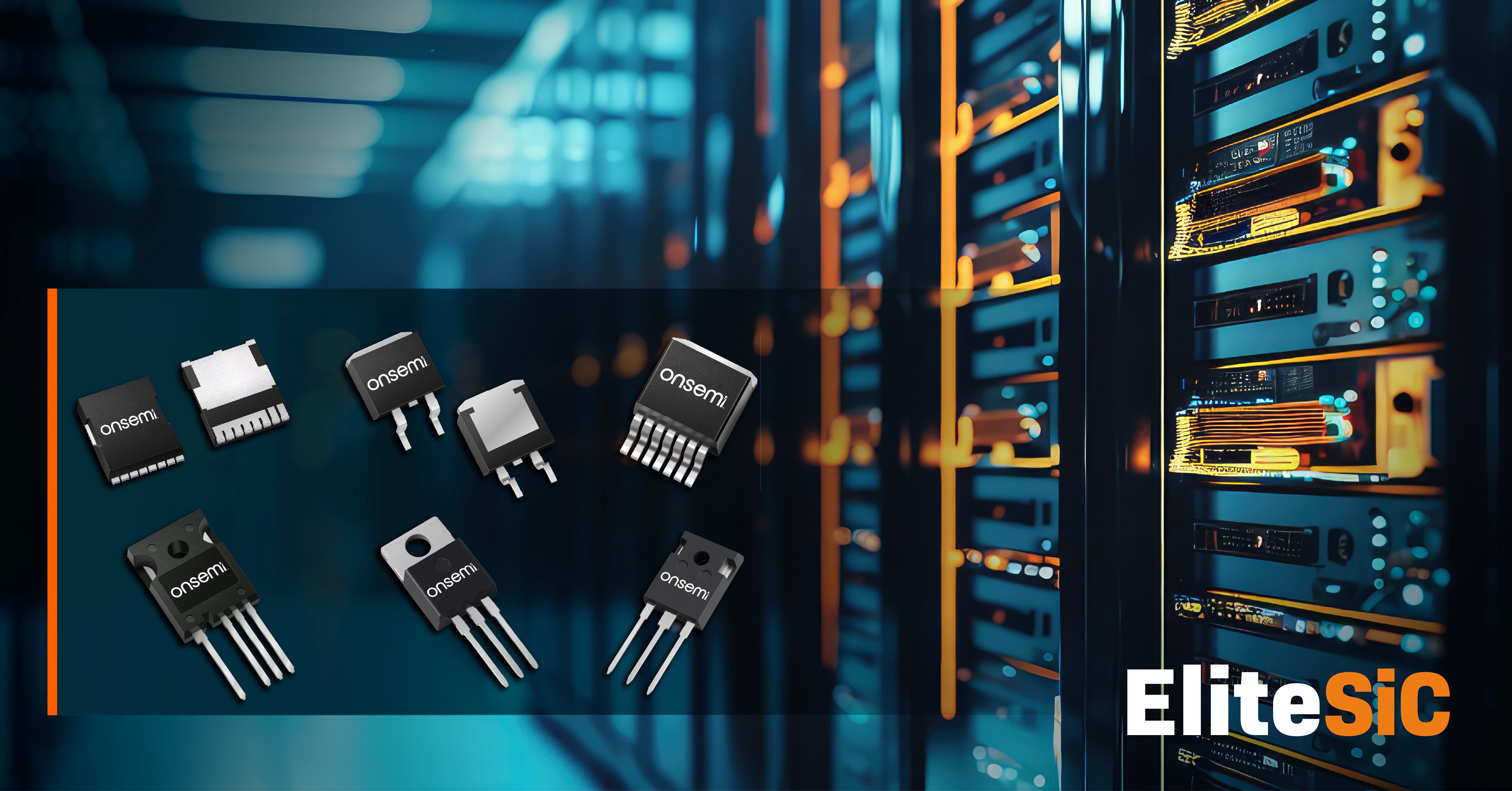
Our SiC JFETs are high-performance, normally-on JFET transistors with VDS-max ranging from 650V to 1700V. They provide high switching frequency and deliver ultra-low on-resistance (RDS (on)) starting at just 4 mohm, utilizing less than half the die size of any other technology. Additionally low gate charge (Qg) enables further reductions in both conduction and switching losses. SiC JFETs are optimized for one of the uses in Power Supply Units (PSUs) and downstream high-voltage DC-DC conversion to handle the enormous power requirements of future AI Data Center Racks. In addition, they improve efficiency and safety by replacing multiple components with a solid-state switch based on SiC JFETs in EV battery disconnect units. Furthermore, they enable certain Energy Storage topologies and Solid-State Circuit Breakers (SSCBs).
Silicon Carbide (SiC) Combo JFETs
SiC combo-FETs represent a revolutionary advancement, combining our low RDS(on) SiC JFET with a Si MOSFET in a single, compact package. Specifically designed for low-frequency protection applications, such as Power Supply Units (PSUs), downstream high-voltage DC-DC converters for AI Data Center Racks, Solid-State Circuit Breakers (SSCBs), EV battery disconnects, and surge protection, these combo-FETs allow users to access the JFET gate for optimized design. The integration of the Si MOSFET ensures a normally-off solution, achieving a size reduction exceeding 25% compared to discrete implementations.
Gate Drivers
NCP51152
3.75 kVRMS, 4.5-A/9-A Isolated Single Channel Gate Driver
GFCI Controllers
NCS37010
Ground Fault Circuit Interrupter (GFCI) with Self Test and Lockout
Ethernet Controllers
NCN26000
10BASE-T1S Ethernet PHY with MII interface
Ethernet Controllers
NCN26010
Ethernet Controller, 10 Mb/s, Single-Pair, MAC + PHY, 802.3cg, 10BASE−T1S Compliant
Bluetooth Low Energy
RSL15
Bluetooth® 5.2 Secure Wireless MCU
Silicon Carbide (SiC) MOSFETs

Our SiC MOSFETs are designed to be fast and rugged and include system benefits from high efficiency to reduced system size and cost. MOSFETs are metal–oxide–semiconductor field-effect transistors with insulated gates. These silicon carbide MOSFETs have a higher blocking voltage and higher thermal conductivity than silicon MOSFETs, despite having similar design elements. SiC power devices also have a lower state resistance and 10 times the breakdown strength of regular silicon. In general, Systems with SiC MOSFETs have better performance and increased efficiency when compared to MOSFETs made with silicon material.

There are many advantages to choosing SiC MOSFETs over silicon MOSFETs, such as higher switching frequencies. High-temperature development is also not a concern when using SiC MOSFET modules because these devices can operate efficiently even in high heat. Additionally, with SiC MOSFETs, you benefit from a more compact product size because all components (inductors, filters, etc.) are smaller.

Documents

Application Notes
SiC Combo JFET Technical Overview
User's Manual
SiC Cascode JFET & Module User Guide
Eval Board: Manual
Combo JFET SSCB Evaluation Board User's Manual
Application Notes
How to Slow Down dV/dt During Switching​​​ Using SiC Cascode JFETs
User's Manual
JFET and Combo-FET User Guide
Application Notes
JFET Primer - Construction and Operation of the SiC JFET
Application Notes
Cascode Primer Operation of the SiC Cascode JFET

Design Resources

Tools and resources for your evaluation process.

Find the Right Product

Utilize our PRT+ tool to identify the ideal product for you.

System Solution Guides

Explore tailored components and insights for your application.

Evaluation Boards & Kits

Buy and validate the performance of chosen components.

FAQs

A solid-state circuit breaker is an electronic protection device that uses semiconductor switches instead of mechanical contacts to interrupt fault currents. SSCBs provide microsecond-level response times, eliminate arcing and enable intelligent monitoring and control functions.

SiC Combo JFETs integrate a normally-on SiC JFET and a low-voltage silicon MOSFET into a normally-off solution. They provide ultra-low RDS(on), improved paralleling capability, controllable switching speed and integrated temperature-monitoring capabilities through direct access to both JFET and MOSFET gates.

SSCBs typically use current-sensing amplifiers, shunt resistors, voltage sensing circuits, comparators and ADCs to detect abnormal operating conditions. Fast hardware-based protection paths allow the system to react within microseconds before semiconductor stress limits are exceeded.

Modern SSCBs often include CAN, Ethernet, Single Pair Ethernet and Bluetooth connectivity to support remote monitoring, predictive maintenance, firmware updates and integration into smart-grid, industrial automation and energy-management systems.

Related Videos

Let's keep going – watch these videos for deeper dives and fresh perspectives.

Support and Community

If you're interested to learn about any onsemi technology, search for related articles in Help library.

サポート

オンセミは、お客様の利便性を考慮し、さまざまな方法によるお問い合わせに対応しています。

セールス

製品に関するご質問、またはデザインに関するサポートが必要ですか?

更新情報

新製品リリース、イベント、技術的洞察!

solid state circuit breaker