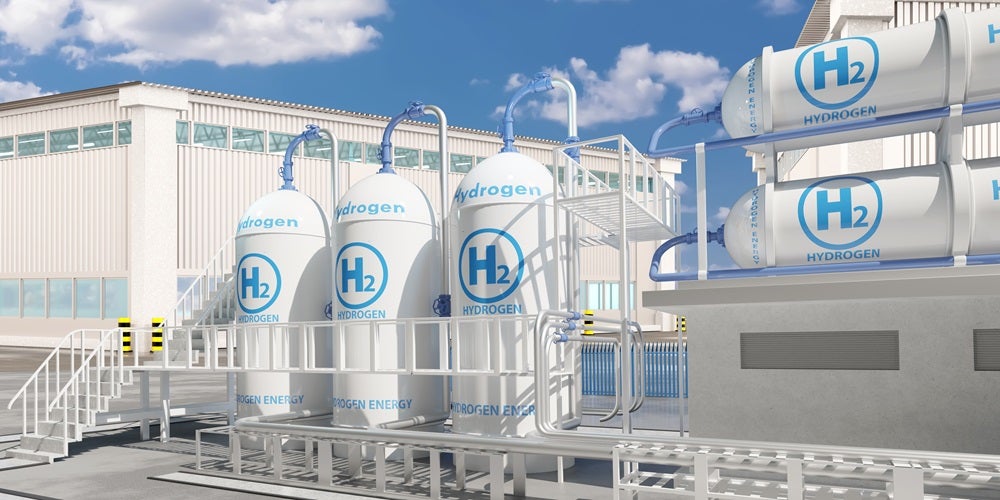
Green hydrogen electrolyzer and hydrogen production

Powering Efficient, Scalable, and Reliable Green Hydrogen

Hydrogen electrolyzers rely on high‑performance semiconductors. Optimized architectures with advanced power modules boost efficiency, reduce costs, ensure reliability, and scale sustainable hydrogen.

Overview

Green hydrogen, produced through water electrolysis powered by renewable energy, is a critical technology for global decarbonization. Hydrogen electrolyzers require high‑efficiency, high‑reliability power electronics to convert grid or renewable input power into precisely controlled DC current for electrochemical hydrogen production.

onsemi provides system‑level solutions including power semiconductor, sensing, and control products designed for modern hydrogen electrolyzers. They address key electrolyzer architectures, power conversion challenges, and how advanced silicon carbide (SiC) and sensing technologies enable higher efficiency, improved scalability, and lower total cost of ownership (TCO) in green hydrogen production.

製品

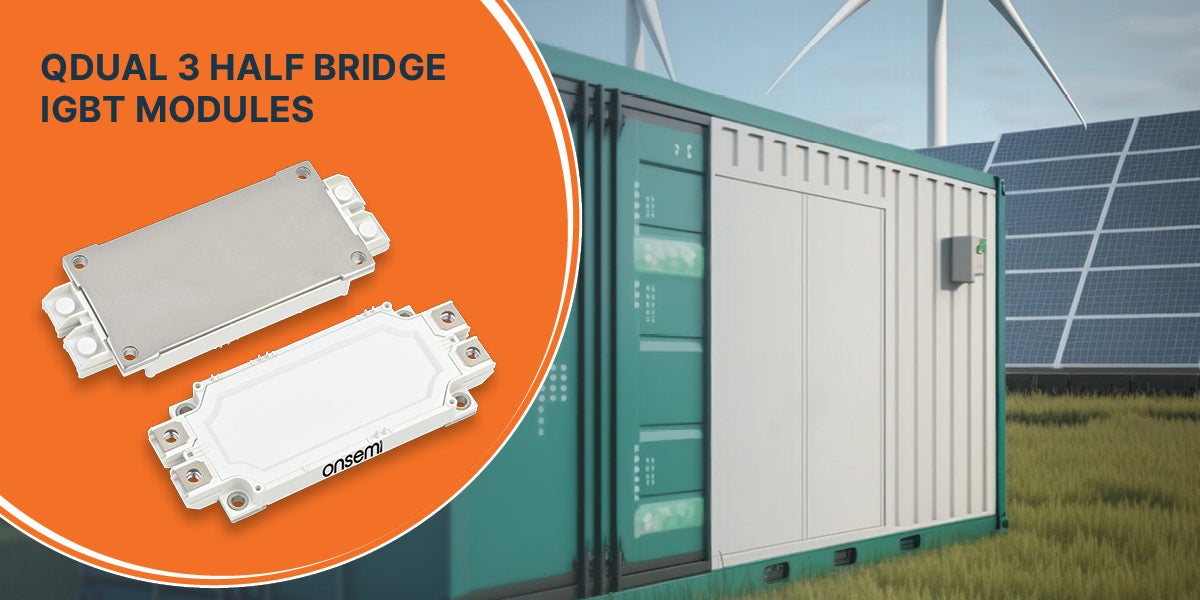
IGBT Modules
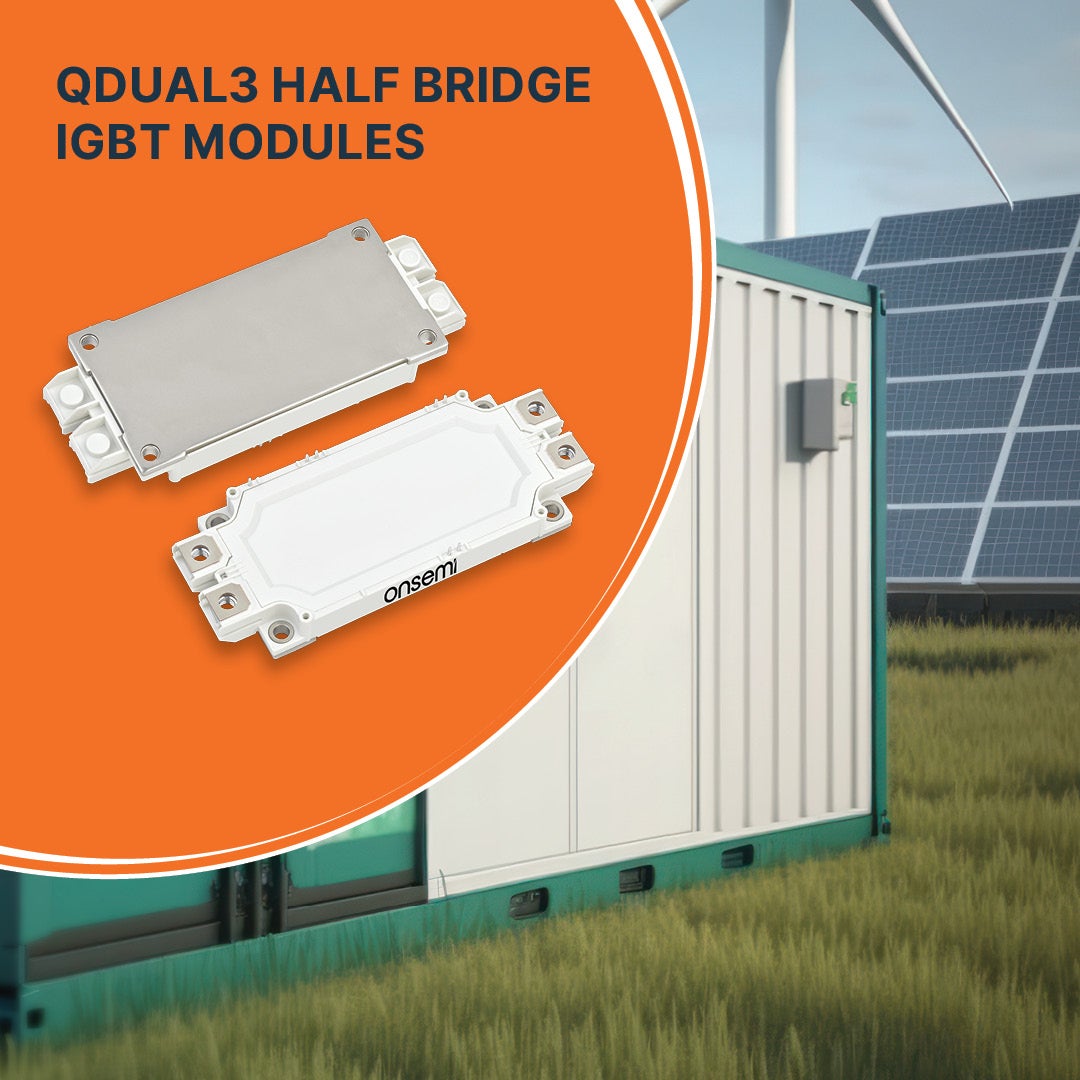
IGBT Modules are used in traction and in the DC-AC stages of solar inverters, energy storage systems, uninterruptible power supplies and motor drives.
Silicon Carbide (SiC) Modules

SiC Modules contain SiC MOSFETs and SiC diodes. The boost modules are used in the DC-DC stages of solar inverters. These modules use SiC MOSFETs and SiC diodes with voltage ratings of 1200V.

A Silicon Carbide (SiC) Module is a power module that operates with Silicon Carbide semiconductors for its switch. The purpose of a SiC power module is the transformation of electrical power through switches to improve system efficiency.

The primary function of SiC Modules is to transform electrical power. Silicon Carbide offers an advantage over silicon because, with less resistance to move away from the source (due to increased efficiency), SiC devices can operate at a higher switching frequency. A SiC based system is also more compact and lightweight than a silicon solution, allowing for smaller designs. Therefore, SiC devices are the ideal solution for situations where you want to increase efficiency and improve your thermal management.

Si/SiC Hybrid Modules

Si/SiC Hybrid Modules contain IGBTs, silicon diodes and SiC diodes. They are used in the DC-AC stages of solar inverters, energy storage systems and uninterruptible power supplies.

Hybrid Si/SiC (Silicon/Silicon Carbide) modules are integrated IGBT power modules with high power density. They have lower switching losses than nonhybrid modules, and they can also work at higher temperatures than other types of semiconductors.

Si/SiC hybrid modules have several uses including being used in high-power applications that need low losses. They may also be used in higher temperature environments than comparable Si modules. For systems requiring high-frequency switching, Si/SiC hybrid modules provide better efficiency.

Gate Drivers
GaN, IGBT, FET, MOSFET, H-Bridge MOSFET, and SiC MOSFET inverting and non-inverting drivers ideal for switching applications.
Silicon Carbide (SiC) MOSFETs

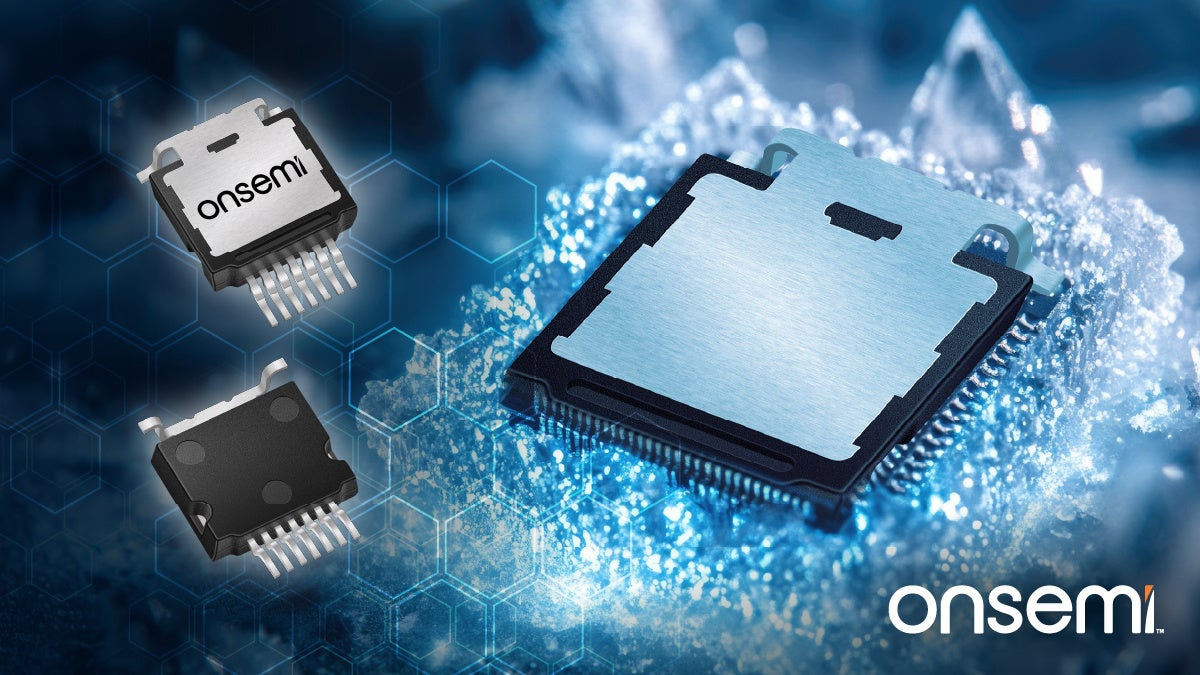
Our SiC MOSFETs are designed to be fast and rugged and include system benefits from high efficiency to reduced system size and cost. MOSFETs are metal–oxide–semiconductor field-effect transistors with insulated gates. These silicon carbide MOSFETs have a higher blocking voltage and higher thermal conductivity than silicon MOSFETs, despite having similar design elements. SiC power devices also have a lower state resistance and 10 times the breakdown strength of regular silicon. In general, Systems with SiC MOSFETs have better performance and increased efficiency when compared to MOSFETs made with silicon material.

There are many advantages to choosing SiC MOSFETs over silicon MOSFETs, such as higher switching frequencies. High-temperature development is also not a concern when using SiC MOSFET modules because these devices can operate efficiently even in high heat. Additionally, with SiC MOSFETs, you benefit from a more compact product size because all components (inductors, filters, etc.) are smaller.

IGBTs
Insulated Gate Bipolar Transistors (IGBTs) that offer maximum reliability in high performance power conversion applications.
Silicon Carbide (SiC) Diodes

Our Silicon Carbide diodes use a completely new technology that provides superior switching performance and higher reliability to silicon.

Many people have been using silicon diodes in their machinery, but there is a new option for those looking for better efficiency. SiC diodes are diodes that allow for higher switching performance. They have greater power density and overall increased efficiency. Their reduced energy loss also helps to lower system costs.

Compared to silicon diodes, silicon carbide diodes are more efficient and resistant to high temperatures. They work at high frequencies and higher voltages. Since SiC diodes have faster recovery times than silicon diodes, they're ideal for any kind of current that requires a quick transition from blocking to conducting stages. They also don't get as hot as silicon, allowing them to be used in higher-temperature applications with more efficiency.

DC-DC Power Conversion
A product portfolio for DC-DC charge pumps, controllers, converters, and regulators.
AC-DC Power Conversion
Offline AC-DC controllers and regulators, and power factor and secondary side controllers that enable high active mode efficiency, low standby mode consumption and power factor correction.
Amplifiers & Comparators
Product portfolio for operational amplifiers (op amp), audio amplifiers, video amplifiers, current sense amplifiers, and comparators.

Documents

Application Notes
Demystifying Three-Phase Active Front End or Power Factor Correction (PFC) Topologies
White Papers
DC-DC Power Conversion Topologies for Battery Energy Storage Systems (BESS)
White Papers
Silicon Carbide (SiC) - From Challenging Material to Robust Reliability
White Papers
Common IGBT Topologies Used in Energy Infrastructure Applications
White Papers
Enhancing Performance, Efficiency and Safety with SiC Isolated Gate Drivers
White Papers
High Performance, Precision Analog Capability Enabled by the Treo Platform
Eval Board: Manual
Evaluation Board for 1200 V SiC MOSFET M3S in D2PAK-7LD showing Benefit of IMS PCB User's Manual

Evaluation Boards/Kits

Evaluation Board
EVBUM2880G-EVB
Evaluation Board for 1200V M3S 2-PACK EliteSiC MOSFET Module
Evaluation Board
EVBUM2883G-EVB
Evaluation Board for 1200V M3S TNPC F2 TNPC EliteSiC Module
Evaluation Board
EVBUM2878G-EVB
Evaluation Board for 1200V M3S 4-PACK EliteSiC MOSFET Module
Evaluation Board
NCP-NCV51152TO2474LGEVB
EVB with TO-247-4L type Power S/W for NCP51152BADR2G / NCP51152CADR2G
Evaluation Board
NCP-NCV51563D2PAK7LGEVB
NCP/NCV51563 EVB OPN

Design Resources

Tools and resources for your evaluation process.

Find the Right Product

Utilize our PRT+ tool to identify the ideal product for you.

System Solution Guides

Explore tailored components and insights for your application.

Evaluation Boards & Kits

Buy and validate the performance of chosen components.

FAQs

Power electronics directly determine electrolyzer efficiency, reliability, and operating cost by converting AC or DC input power into tightly regulated DC current for the electrolyzer stack. High‑performance rectifiers and DC‑DC converters enable fast load response, reduced losses, improved thermal management, and scalable system architectures for megawatt‑class hydrogen production.

Common architectures include a single rectifier per stack or a central rectifier with DC‑DC converters per stack. Distributed rectifiers provide independent control and higher fault tolerance, while centralized rectifiers reduce cost per kilowatt and improve efficiency at large scale. The choice depends on power level, redundancy needs, and operational flexibility.

High‑power electrolyzers commonly use active front‑end (AFE), Vienna, or advanced neutral‑point‑clamped (NPC) rectifier topologies. These architectures improve power factor, reduce harmonic distortion, and provide precise DC bus control, which is essential for grid‑connected and renewable‑integrated hydrogen production systems.

Modular power designs simplify installation, maintenance, and capacity expansion by allowing systems to scale from kilowatts to megawatts. Modular rectifiers, DC‑DC converters, and power modules improve redundancy, reduce downtime, and lower total cost of ownership (TCO), especially in utility‑scale or rapidly deployed hydrogen infrastructure projects.

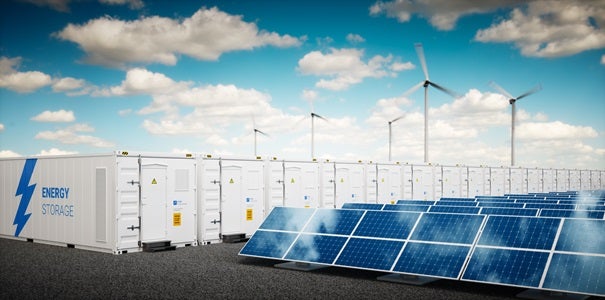
Electrolyzers increasingly operate alongside renewable generation and battery storage to optimize hydrogen production based on power availability and cost. Advanced control and fast‑response power electronics enable dynamic operation, grid balancing, and efficient energy storage, making electrolyzers a key component of future low‑carbon energy systems.

Worth Your Time

Discover curated articles brimming with innovative insights and industry trends.

Related Videos

Let's keep going – watch these videos for deeper dives and fresh perspectives.

Support and Community

If you're interested to learn about any onsemi technology, search for related articles in Help library.

サポート

オンセミは、お客様の利便性を考慮し、さまざまな方法によるお問い合わせに対応しています。

セールス

製品に関するご質問、またはデザインに関するサポートが必要ですか?

更新情報

新製品リリース、イベント、技術的洞察!

hydrogen electrolyzer